 |
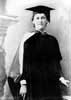
Helen Connon (1860-1903)
Helen Connon was the first woman student to be admitted to Canterbury College. Matriculating in 1876, Helen Connon graduated BA in 1880 - the second woman arts graduate in the British Empire. She gained her MA with first-class honours in English and Latin in 1881 and became the first woman in the British Empire to win a degree with honours.
Back to top
|
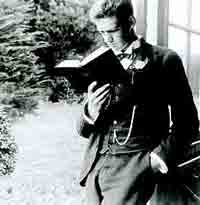 |
Jack Erskine
Jack Erskine joined Canterbury College in 1891, where he was surrounded by students of similar calibre, including: Willie Marris who later became a brilliant administrator and Governor of Assam; Apirana Ngata, the first Maori to graduate from the University of New Zealand; Rutherford; and James Hight who returned to lead the College as Rector from 1928 to 1941. From 1894 Erskine worked with Rutherford on a number of electrical experiments. He gained an M.A. with double first class honours (the sixth person to achieve this in New Zealand, Rutherford being the fifth), in experimental science and in mathematics & mathematical physics. He was awarded the Exhibition of 1851 Scholarship and later worked in Germany followed by London. He returned to New Zealand in 1901 where the only work he could find in Invercargill was as a boiler stoker. Erskine returned to Canterbury College and obtained first class certificates in strengths of materials, advanced steam, applied mechanics, and the mechanics of machinery. He then began working in industry, firstly for the General Electric Company at Schenectady in the United States (1903 - 1904), then as an electrical engineer for the Sulphide Corporation at the Broken Hill mines in Australia (1905-1911), and for General Electric in Australia (1912 - 1920). After 1920 he worked as a private consultant and he played the stock market with great success, having one of the finest analytical brains in the business. Jack Erskine died in 1960; and left a will which established a trust fund. The trust fund was to be used to pay the fares and expenses of teaching staff to overseas countries to enable them to increase their knowledge in any subject taught in the Science, Engineering or Commerce faculties and better enable them to teach those subjects.
Back to top
|
 |
Dame Ngaio Marsh
Ngaio Marsh was acclaimed internationally as an artist, playwright, actor, novelist and director. Marsh attended Canterbury College School of Art and began writing articles, poems and stories. She toured as an actor between 1919 -1920 and then joined the Wauchop School of Drama and Dancing as a tutor. Her play, Little Housebound, was performed by Wauchop in 1924. In 1927 she was part of an exhibition by The Group, organised to differ from the conservative hanging policy of the Canterbury College School of Art. Marsh travelled to England in 1928 and her first novel was published in 1934. Marsh wrote 32 detective stories, and in the 1930s was crowned as one of the 'Queens of Crime' alongside such figures as Agatha Christie and Dorothy L Sayers. In 1941 the Canterbury University College Drama Society asked Marsh to direct Outward bound, by Sutton Vane, marking the beginning of what was later described as 'a small but unmistakable Golden Age'. Her directing style was imaginative, meticulous and autocratic, based on her admiration for the theatrical style of London and Stratford. She was made an OBE in 1948 and a DBE in 1966. In 1962 she was awarded an honorary degree in literature from the University of Canterbury.
Back to top
|
 |
Tim McLean, BE(Hons) 1988
Worked in Manufacturing operations and General Manager roles for 15 years in Australia across Chemicals, Plastics, Packaging and Coatings Industries. Set up TXM Consulting in 2004 to provide assistance to manufacturing companies to improve their operations through lean manufacturing. TXM has offices in Melbourne, Sydney, Brisbane and Shanghai and a team of 12 working in the across Australia, South East Asia and China. In New Zealand there ie a very good (Toyota-trained) consultant in Christchurch. Tim visits NZ every year and was shocked to see the devastation in his home town of Christchurch last year. Find out more at www.txm.com.au.
Back to top
|
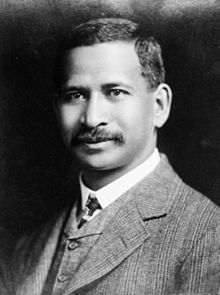 |
Sir Apirana Ngata
Apirana Ngata was the first Maori to graduate from the University of New Zealand and later became a renowned leader, land reformer and politician. He graduated B.A. with second-class honours in political science in 1893. In 1894 he studied for his M.A. (graduated 1921) and also for his law degree. In 1897 he gained his LL.B. and was admitted as a barrister and solicitor. The honorary degree of Doctor of Literature was conferred upon him by the University of New Zealand in 1948. Ngata became travelling secretary for the Young Maori Party and in 1905 was elected a member of Parliament, where he remained until 1943. His Maori Land Development Scheme, inaugurated in 1931 when he was Minister of Maori Affairs, was one of the greatest achievements of his Parliamentary career. He was president of the Polynesian Society for nine years, and encouraged ethnological research, both financially and through his own stimulating articles. Ngata was knighted in 1927 in recognition of his services to Maori communities and for his efforts as chief recruiting officer during the first World War. Throughout his life Sir Apirana Ngata was instrumental in contributing towards the revival of the Maori race spiritually, culturally, and economically.
Back to top
|
 |
Warren Poh, BE (Hons) and MEM (2005)
Warren knew from the age of 16 that he wanted to be an electrical engineer. Having graduated with a Bachelor Engineering with Honours and a Masters of Engineering Management, Warren has working for Cosgroves, a Christchurch-based building services engineerin consultancy. As a Design Electrical Engineer he works on completing electrical engineering designs and specifications. Read full profile.
Back to top
|
 |
John Rayner, PhD in Geography (1965)
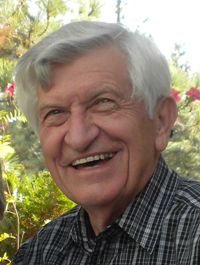
Born in England in 1936, John Rayner graduated from the University of Birmingham in 1958 in Geography with ancillary subjects of Mathematics and Archaeology. With an Arctic Carnegie Scholarship, he completed an MSc in meteorology at McGill University in Montreal in 1961. There he worked on one of the early IBM computer mainframes. Dr Rayner's first faculty appointment was at the University of Canterbury as a lecturer specialising in climatology and he completed his PhD in 1965. Read full profile.
Back to top
|
 |
Andrew Reid, MBA with Distinction (2010)
Andrew's path to the MBA course has been more curved than most and includes working as a photojournalist in Sarajevo during the Bosnian war (where he met his wife Atka) and more recently running an aviation business. Read full profile.
Back to top
|
 |
Ernest, Lord Rutherford
Nobel laureate, Lord Rutherford, known as ‘the father of the atom’ for his discovery of atomic structure, completed his degree at Canterbury College in 1894. He left New Zealand in 1895, with three degrees and moved to Cambridge Cavendish Laboratory where he was the first non-Cambridge graduate to become one of its research students. In 1898 Rutherford accepted a professorship at McGill University in Montreal, Canada where his discovery of the natural transmutation of elements first brought him to world attention. In 1908 he was awarded the Nobel Prize in chemistry for his investigations into the disintegration of elements and the chemistry of radioactive substances.
Back to top
|
 |
Hana Schofield, LLB (2002)
In May 1992, twelve-year-old Hana is put on one of the last UN evacuation buses fleeing the besieged city of Sarajevo by her elder sister Atka. Two years later, having lived as a refugee in Croatia, Hana arrived in Christchurch speaking no English. Fast forward ten years. In 2002 Hana graduated from UC with degrees in Law and Russian.
In 2011, Hana, together with Atka, celebrated the release of Goodbye Sarajevo, their account of the bloodiest European conflict since World War Two. Published by Bloomsbury (and written in Christchurch), Goodbye Sarajevo is a great achievement handled with honesty, humour and compassion. Read full profile.
Back to top
|
 |
Glenn Turner, BE(Hons) 1982
Glenn's career started in the Agricultural chemicals industry then moved to Oil and Gas with Shell, apart from a brief time in industrial fibreglass. His last 20 years have been spent in oil and gas in places such as London, Nigeria, Brunei, Singapore, Saudi Arabia, Kuala Lumpur, New Zealand and Australia. He has been Prinicpal Consultant with Worley Parsons for the last 5 years in Perth, Western Australia.
Back to top
|
|

|
Andrew Winter, BSc 1990
Since leaving UC Andrew has worked in international oil and gas exploration and production companies searching for oil and gas. This work has taken him to countries including Bolivia, Argentina, Italy, Indonesia, Canada, USA, Philippines and the North Sea. The role is very specialised in applied physics and he leads a team of 3 petrophysicists for a medium sized Canadian company based in Aberdeen.
Back to top
|
| |
|
| |
|